

Last Tuesday, a family in Temecula found a small pile of what looked like sawdust near their hallway baseboard, only to realize it was the first sign of a $5,000 repair bill. You shouldn't have to spend your weekends worrying if those winged insects in the kitchen are just harmless ants or a destructive california termite colony ready to eat through your equity. It's completely normal to feel anxious about the thought of toxic fumigation tents or massive, unexpected invoices. As your local neighbor, I want to help you find that peace of mind again.
In this guide, you'll discover the specific termite species threatening Southern California homes in 2026 and how to protect your property from the Inland Empire to the coast. We're breaking down everything from accurate pest identification to city-specific risk levels. You'll walk away with a clear, local plan to keep your home safe, your family protected, and your budget intact. Let's get your home back and keep those pests away for good.
Key Takeaways
- Learn to identify the three main termite species and why drywood termites are the #1 indoor threat to homes in Temecula and Murrieta.
- Discover the key differences between drywood and subterranean colonies to help you decide between a targeted spot treatment or a full tent.
- Find out when swarm season hits the Inland Empire and North County so you can spot the signs before an infestation starts.
- Use our local prevention checklist to stop a california termite invasion by fixing moisture issues and wood-to-earth contact around your home.
- See why 20 years of local experience in the Temecula Valley provides the specific protection your family needs against Southern California pests.
The Big Three: Identifying the California Termite Species
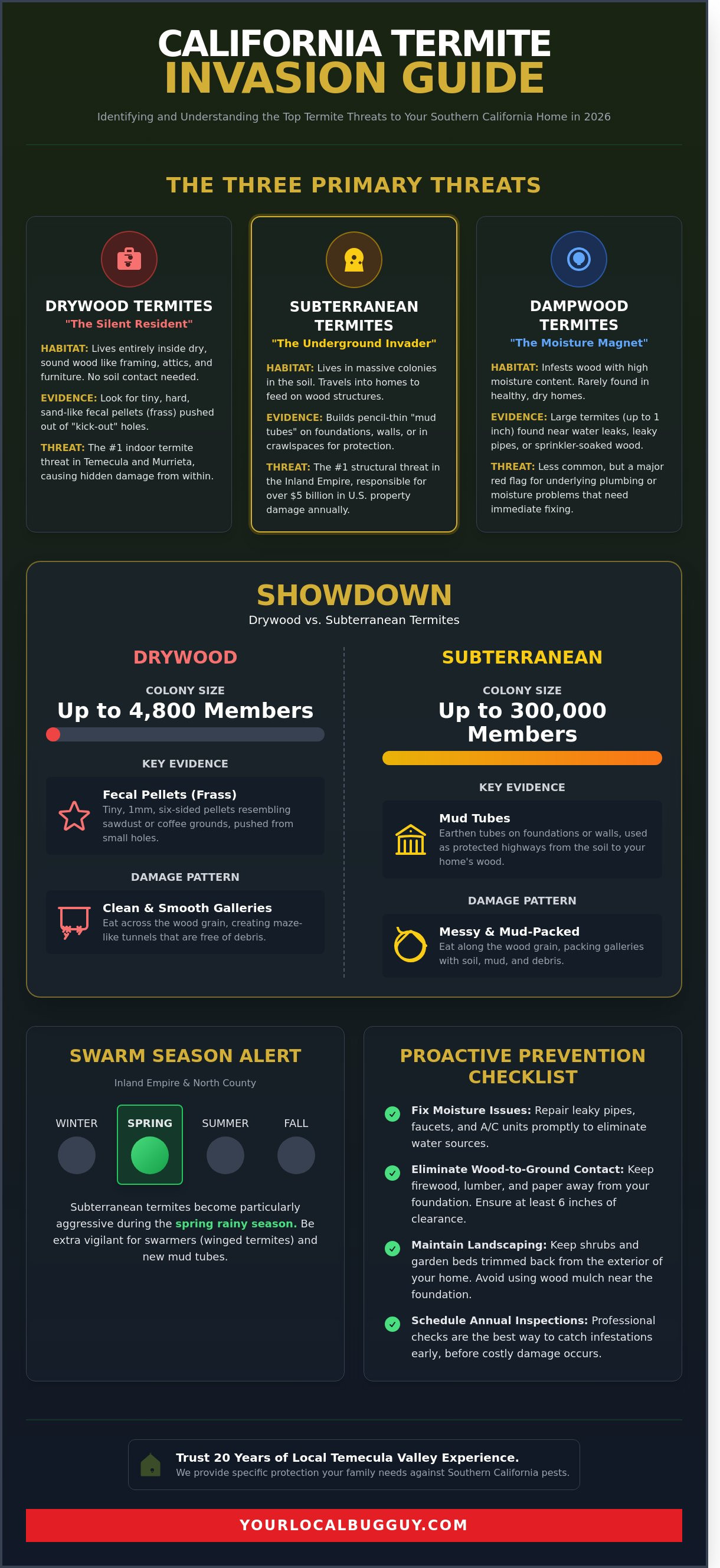
Living in the Temecula Valley means enjoying the sun, but it also means sharing your property with the california termite. You aren't just dealing with one type of pest. You're facing three distinct species that each require a different game plan for your home. We see Drywood, Subterranean, and Dampwood termites across North San Diego County every day. Knowing which one is eating your equity is the first step toward protecting your family's biggest investment. In 2026, we've seen a 12 percent increase in local calls regarding these wood-destroying organisms compared to the previous year. You need to know what to look for before the damage becomes a budget-buster.
Drywood Termites: The Silent Resident
Drywood termites are the most frequent "indoor" threat for homeowners in Murrieta and Temecula. Unlike their cousins, they don't need a connection to the earth. They live their entire lives inside your home's framing, furniture, or attic. You'll often find them in window frames or structural beams where they chew through the wood from the inside out. Look for "frass." These are tiny, sand-like pellets that the termites push out of their galleries to keep their tunnels clean. If you see a pile of what looks like sawdust or coffee grounds near a baseboard, you likely have a Drywood infestation. These pests are commonly found in attics and window frames across North San Diego County. Because they don't need soil, they can start a colony anywhere the wind carries a swarmer.
Subterranean Termites: The Underground Invader
Subterranean termites are the heavy hitters of the pest world. They cause massive property damage across the United States every year, totaling over $5 billion in repairs. Western Subterranean termites are the #1 structural threat in the Inland Empire. These pests live in the soil and build "mud tubes" to travel from the ground to your floor joists. These tubes look like thin veins of dried dirt climbing up your foundation or hanging from a crawlspace. Subterranean termites require moisture from the soil to survive, making mud tubes their essential lifeline. If you break a tube and see white, creamy insects scurrying away, you have an active problem. Our local soil conditions make these invaders particularly aggressive during the spring rainy season.
Dampwood termites are much less common in our dry, Mediterranean climate. They usually only show up if you have a specific moisture problem that has gone ignored. If you have a leaky pipe under the sink or a broken sprinkler head soaking a fence post, you might attract them. They need wood with high moisture content to thrive. We rarely see them in healthy, dry homes, but they are a red flag for plumbing issues. If you spot a california termite that is significantly larger than a grain of rice near a water leak, it's likely a Dampwood. They can grow up to one inch long, making them the giants of the termite world. Don't wait for the wood to crumble before you call for a professional inspection.
Drywood vs. Subterranean: A Southern California Comparison
Identifying the right california termite species is the first step toward saving your equity. In the Temecula Valley, we deal with two main culprits: Drywoods and Subterraneans. Each requires a totally different strategy. Drywood colonies are usually smaller, often topping out at 4,800 members. They're like small, independent cells scattered throughout your attic or walls. Subterranean colonies are the heavy hitters. These underground cities can house up to 300,000 workers. In Murrieta, it’s common for us to find dual infestations. This happens when Subterraneans come up through the soil while Drywoods enter through the eaves. Knowing which one you’re fighting determines if we can use a localized approach or if it’s time for a full tent.
Key Differences in Damage Patterns
Drywood termites are neat freaks. They eat across the wood grain and leave behind clean, smooth galleries. If you find piles that look like sawdust in your Menifee garage, look closer. These are actually fecal pellets, or frass, about 1 millimeter in size with six flat sides. They push these out of tiny "kick-out" holes to keep their tunnels clean. Subterranean termites are much messier. They follow the wood grain and bring soil with them. Their galleries are packed with mud, debris, and moisture. You'll often see their signature mud tubes climbing up your foundation to reach the wood framing. These tubes protect them from the dry california termite environment above ground.
Treatment Approaches for Each Species
Treating these pests isn't a one-size-fits-all job. Subterranean termites live in the dirt, so we build a chemical or bait barrier around your home's perimeter. This stops them from ever reaching your framing. However, soil barriers won't do a thing for Drywoods because they never touch the ground. For early-stage Drywood issues, we often use localized no-tent treatments like orange oil or specialized foam injections. These work well when the infestation is caught early in a single door frame or window sill. If the infestation has spread deep into the rafters, a full tent might be the only way to guarantee a 100 percent kill rate. You can learn more about these options in our termite treatment near me guide.
Don't let these silent destroyers eat your investment. If you suspect a problem, our team at Your Local Bug Guy can provide a professional termite inspection to give you peace of mind and protect your family home.
Termite Swarm Season in the Inland Empire & North County
Swarming is nature's way of telling you that a colony has reached its limit and is looking to expand. For a california termite, this process is the primary method for establishing new colonies in our neighborhoods. These winged "alates" leave their original nest in massive numbers to find a mate and a new piece of wood to call home. In the Temecula Valley and Murrieta areas, we usually see this activity triggered by the first warm rains of the fall season. This often happens around late October or November, but early 2026 weather patterns could shift this timeline by a few weeks.
Coastal residents face a different reality. If you live in Oceanside or Carlsbad, the thick marine layer and higher humidity levels change the termite's internal clock. You are more likely to see swarms during the late spring or summer when the air is heavy with moisture. It's a localized event; a swarm might hit one block in North County while the next street over stays completely clear. Understanding your specific microclimate helps you stay ahead of these pests.
If you walk into your living room and see a cloud of insects, don't panic. A swarm is a serious warning sign, but it does not mean your home will suffer a structural collapse by morning. It takes years for termites to cause significant structural damage. Think of a swarm as a check-engine light for your house. It's time to take action, but you have enough time to make an informed decision without feeling rushed by fear. Each california termite species requires a different approach, so identifying what you're looking at is the first step toward peace of mind.
Termites vs. Flying Ants: How to Tell
Many homeowners mistake a harmless ant swarm for a termite invasion. Before you worry, look closely at the physical traits of the bugs you found. Termites have straight, beaded antennae, while ants have "elbowed" or bent ones. Check the wings next. Termite wings are equal in length and much longer than their bodies. Ants have large front wings and noticeably smaller back wings. Finally, look at the waist. Termites have a thick, straight waist, but ants have a very pinched, narrow midsection. Knowing these details can save you a lot of unnecessary stress.
What to Do When You See a Swarm
When a swarm happens inside your home, grab a glass jar and collect a few samples. This helps your local bug guy provide an accurate identification and treatment plan. Check your window sills and light fixtures immediately. Swarmers are naturally drawn to light and often lose their wings and die near these spots, leaving behind piles of translucent wings as evidence. Don't waste time with DIY sprays that only kill the bugs you see. Schedule a free termite inspection near me to find the source of the colony and protect your investment. We'll provide a clear, honest assessment of your home's safety.
Preventing Termite Infestations in Southern California
Keeping a california termite colony away from your foundation starts with controlling the environment. These pests need two things to survive: food and water. If you cut off their access, you protect your investment. Start by checking your AC condensation lines. A single leaky line can drop 5 gallons of water per day directly against your slab, creating a perfect highway for pests. Fix irrigation heads that spray your siding. Keeping the first 18 inches of your foundation bone-dry is the most effective way to stop an invasion before it starts.
Eliminate wood-to-earth contact immediately. When your siding or deck posts touch the soil, you invite termites to dinner without them ever having to leave the safety of the ground. We often see North County homes where patio covers were built directly onto the dirt. This mistake leads to structural damage in 70% of cases within five years. Use concrete footers to lift all wood at least 6 inches above the grade. It's a simple fix that saves you thousands in wood replacement costs later.
Ventilation is your next line of defense. Dampwood termites thrive in stagnant, humid air. Ensure your crawl space vents provide at least 1 square foot of airflow for every 150 square feet of floor space. If your attic feels like a sauna, it's time to clear those soffit vents. Dry air is the enemy of a california termite queen. While we handle the treatments, these small home repairs make your property a much less attractive target.
Landscaping Tips for Temecula Homeowners
Your yard shouldn't be a bridge to your bedroom. Keep mulch at least 12 inches away from your home's foundation. Use gravel or decorative rock in that "inspection strip" instead. Trim your shrubs so there's a 12-inch gap between the leaves and your walls. This allows us to spot mud tubes during our visits. If you live in Menifee or Murrieta, move that firewood stack. Keeping logs against the garage is a guaranteed way to attract Subterranean termites. Store wood on a metal rack at least 20 feet from the house.
The Role of Preventative Maintenance
Annual inspections are the only way to catch Subterranean species before they cause structural failure. These pests work from the inside out, often leaving no visible signs to the untrained eye. Our recurring service plans include a professional Wood Destroying Organism (WDO) report. This 12-point check ensures your home remains a fortress. When you're looking for the right partner, check out our guide on termite companies near me to see what sets a local expert apart from a national chain.
Why Your Local Bug Guy is the Right Choice for California Termites
We aren't a massive national franchise with a corporate office in another time zone. We live and work right here in the Temecula Valley. When you call us, you're talking to a neighbor who knows exactly how the local weather patterns affect pest activity. Since 2004, we've spent over 20 years perfecting our approach to the specific california termite species that thrive in our Mediterranean climate. We understand the difference between a drywood infestation in a Fallbrook attic and subterranean activity in a Murrieta crawlspace.
Our team uses family-safe, EPA-approved treatments. These methods are designed to be incredibly tough on wood-destroying pests but gentle on your household. We prioritize low-impact solutions that protect your pets and your children. Our 100% satisfaction guarantee isn't just a marketing slogan; it's a personal promise. If the bugs come back before your warranty is up, we do too. We don't just kill bugs. We protect our neighbors and the community we share.
Our Personalized Inspection Process
We don't believe in high-pressure sales tactics or "one size fits all" solutions. When we visit your property, you get honest expertise from a local pro. We look for the subtle signs of infestation that others miss, such as moisture pockets or hidden mud tubes. You'll receive a detailed report with clear treatment options tailored to your home's structure and your personal budget. We proudly serve homeowners across these areas:
- Temecula and Murrieta
- Menifee and Sun City
- Fallbrook and Bonsall
- The North County coastal communities
In the last 12 months alone, we've identified and treated over 450 active infestations in these zip codes, saving local families thousands of dollars in potential structural repairs.
Take the First Step Toward Peace of Mind
Don't wait until you see "sawdust" piles or discarded wings on your windowsills. By the time those signs appear, the california termite has often been eating your floor joists for months. Your home is likely your biggest financial investment, so trust a pro who knows these streets and construction styles. We provide the security you need to sleep soundly. Get your free termite inspection from Your Local Bug Guy today!
Secure Your Southern California Home Today
Your home is your biggest investment; don't let a california termite colony eat away at your hard earned equity. We've explored how to identify the big three species and why understanding the difference between Drywood and Subterranean termites saves you from costly repairs. Timing your prevention strategies for the 2026 swarm season in North County is the smartest move a homeowner can make. Protecting your property shouldn't be a headache or involve scary chemicals. At Your Local Bug Guy, we bring 20+ years of local experience to every doorstep in Temecula and beyond. We only use EPA-approved family-safe products because your family's health is just as important as your home's structure. You can rest easy knowing our work comes with a 100% satisfaction guarantee. We're your neighbors, and we take pride in keeping our community pest-free and safe. Take the first step toward total peace of mind right now.
Schedule Your Free Local Termite Inspection Now
We're ready to help you protect what matters most with a friendly handshake and expert service.
Frequently Asked Questions
Is a termite inspection required by law in California?
California state law does not mandate a termite inspection for every property sale. However, 90% of traditional lenders require a clear Section 1 termite report before they will fund a home loan. If you are financing a home in Temecula, your bank will likely insist on this inspection to protect their investment. It's a standard part of the escrow process that ensures the building is structurally sound.
How often should I get a termite inspection in Temecula?
You should schedule a professional termite inspection every 12 to 24 months to keep your home safe. Termites cause over $5 billion in property damage across the United States every year, and our warm local climate keeps them active through all four seasons. A quick annual check helps us catch activity before it turns into a $3,000 repair bill. Regular inspections provide the peace of mind your family deserves.
What is the most common termite in Southern California?
The Western Drywood Termite is the most frequent intruder we see in North County homes. These pests account for approximately 70% of our local service calls because they don't need contact with soil to survive. They move into your attic or wall studs and eat the wood from the inside out. Identifying a california termite infestation early prevents these pests from compromising your home’s structural integrity and safety.
Can I treat California termites myself with store-bought spray?
DIY sprays usually only kill the 5% of termites you see on the surface, leaving the rest of the colony alive. Store-bought products lack the advanced transfer effect needed to reach the queen hidden deep inside your home's framing. Professional-grade treatments use non-repellent technology that workers carry back to the entire nest. Relying on a $20 can of spray often leads to $10,000 in hidden structural damage over a 3 year period.
How much does termite treatment usually cost in Murrieta?
Termite treatments in Murrieta typically range from $500 for localized spot treatments to $3,500 for full-home fumigation. The final price depends on your home's total square footage and the severity of the infestation. We provide clear, upfront quotes so you know exactly what to expect before we start. Most homeowners find that early intervention saves them 60% compared to the cost of delayed structural repairs.
What happens if I find termites during a home sale in Menifee?
Finding termites during a Menifee home sale usually triggers a negotiation between the buyer and the seller. In 85% of local real estate transactions, the seller pays for the Section 1 repairs to ensure the deal closes on time. You'll need a licensed professional to clear the active infestation and issue a formal certification. We work fast to help you meet your 30-day closing deadline without any added stress.
Does home insurance cover termite damage in California?
Standard California homeowners insurance policies almost never cover termite damage or removal costs. Insurance companies view termites as a preventable maintenance issue rather than a sudden, accidental event. This means a california termite problem could cost you thousands of dollars out of pocket if you don't have a preventative plan. Since 1 in 5 Southern California homes will face termite issues, consistent inspections are your best financial defense.
Are "no-tent" termite treatments effective for Drywood termites?
No-tent treatments are highly effective if the infestation is localized and the wood is accessible. We use orange oil or localized injections to target specific galleries without making you move out of your house for 3 days. However, if termites have spread to 4 or more separate areas, fumigation remains the gold standard for a 100% kill rate. We'll inspect your home and give you an honest recommendation on the most effective path forward.