What if the biggest threat to your dog’s health isn't the treatment itself, but the pests hiding in your Southern California backyard? Many local pet owners find themselves asking: is pest control safe for dogs? You want a home free of ants and spiders, but the fear of toxic reactions or confusing labels can feel overwhelming. We know your dog is family. You deserve a pest-free home without the anxiety of wondering if your pup is at risk. In 2025, the ASPCA Animal Poison Control Center handled over 376,000 cases; we're here to ensure your home stays safe and secure.
Our team provides total relief through expert protocols and pet-friendly solutions. You'll learn how the latest 2026 EPA Pesticide General Permit and California DPR regulations protect your household while we eliminate disease-carrying pests. We'll also provide a clear set of instructions for "spray day" so you know exactly how to manage your dog's routine. From understanding new 2026 labeling requirements to choosing the right bi-monthly service plan, this guide gives you the tools to keep your home secure and your dog 100% safe.
Key Takeaways
- Learn why the professional answer to is pest control safe for dogs involves strict protocols that prioritize your pet's health.
- Discover how EPA-approved treatments and IPM strategies minimize chemical exposure in your Inland Empire home.
- Identify the dangerous regional pests that pose a bigger threat to your pup than the treatments we use.
- Master our simple five-step preparation guide to make every service day smooth and stress-free for your dog.
- See how 20 years of local expertise creates a safer environment for Southern California families and their pets.
Is Pest Control Safe for Dogs? The Short Answer
You can breathe a sigh of relief. The short answer is yes, professional pest control is safe for dogs as long as everyone follows the correct safety protocols. We understand the anxiety that comes with seeing a technician in protective gear. It makes you want to grab your pup and run the other way. However, modern residential treatments use EPA-approved products specifically designed to be used around families and pets. These formulas are a far cry from the harsh chemicals used decades ago.
The most important factor in pet safety is the "Dry Rule." This simple guideline is your best friend on service day. Keep your dog away from treated areas until the product has completely dried. Once the spray is dry, the active ingredients bond to the surface. This means your dog can walk, sniff, and play without picking up the product on their paws or fur. Typically, this takes about 30 to 60 minutes depending on the Southern California sun. Always wait for your technician to give the "all clear" before letting your dog back into the yard.
Choosing a professional service is actually much safer than trying to handle a pest problem yourself. Many homeowners buy high-concentration poisons from big-box stores and over-apply them. This creates puddles and runoff that put your pets at risk. We use specialized equipment to apply the exact amount needed to stop pests without leaving excess waste behind. We focus on cracks, crevices, and entry points where bugs hide, keeping the products away from your dog's favorite lounging spots.
The Science of Low-Concentration Application
Professional-grade products are highly sophisticated. They often target specific nervous systems found in insects that are absent in mammals like dogs. Our technicians use precise dilution ratios that are much lower than what you find in over-the-counter sprays. We also rely on the residual effect of our treatments. A residual effect means the product stays exactly where we put it on a surface to catch bugs later; it does not hang in the air for your dog to breathe in. This targeted approach keeps the treatment effective for pests while remaining low-risk for your furry friends.
Why "Natural" Isn’t Always Safer
Don't be fooled by "all-natural" labels. Many people assume essential oils are automatically better, but some can be quite dangerous. Concentrated peppermint, clove, or cinnamon oils can cause skin irritation or respiratory issues in sensitive dogs. While we focus on safety, it's helpful to understand the wide range of substances poisonous to dogs that exist in everyday life. EPA-regulated products are often more predictable because they undergo rigorous testing for residential safety. We choose products with proven track records so you never have to guess about your dog's well-being.
How EPA-Approved Treatments Protect Your Inland Empire Home
The EPA doesn't take safety lightly. Before any treatment reaches your Inland Empire doorstep, it undergoes a battery of tests to ensure it meets strict residential standards. Scientists evaluate how products interact with mammals. They look at everything from skin contact to accidental ingestion. This high level of scrutiny is a major reason why the answer to whether is pest control safe for dogs is a confident yes. These regulations ensure that the products we use are effective against pests but remain low-risk for the animals you love.
We take our role as your local experts seriously. As your neighbors in Temecula, we treat your home with the same care we give our own. We focus on using the right product in the right place at the right time. This isn't just about killing bugs; it's about creating a secure environment for your entire family. If you want to see how we customize these protections for our community, you can view our service plans to find the best fit for your household.
Integrated Pest Management (IPM) for Pet Owners
We believe in working smarter, not harder. Our approach centers on Integrated Pest Management (IPM). This strategy prioritizes long-term prevention over heavy chemical use. By identifying why pests are entering your home, we can stop the problem at the source. This might involve sealing gaps around pipes or suggesting changes to your landscaping. For a deeper look at local strategies, check out our guide on pest control in Temecula CA. This method drastically reduces the chemical footprint inside your living space.
Targeted Application Methods
We don't just walk around and spray everything in sight. That's inefficient and unnecessary. Instead, we use targeted application methods that keep products away from your pup. For example, we use "crack and crevice" treatments. This involves placing small amounts of product into the tiny gaps where pests hide, well out of reach of a curious nose. When dealing with rodents, we use tamper-resistant bait stations. These heavy-duty boxes are designed to keep dogs out while effectively managing the pest population. Understanding the basics of Pets and Pesticide Use can help you feel even more secure during your service. Perimeter sprays around the exterior of your home act as a first line of defense, stopping bugs before they ever cross your threshold.
Pests vs. Pesticides: What is the Real Risk to Your Dog?
Many homeowners worry about the products we use, but they often overlook the critters already living in their grass. In Southern California, the local wildlife poses a much more immediate threat to your pup than a professional, controlled treatment ever will. Black widows, ticks, and aggressive ants aren't just nuisances. They are genuine health hazards. Deciding if is pest control safe for dogs requires looking at the bigger picture of pet health and the dangers of inaction.
When you skip professional service, you aren't just avoiding "chemicals." You are inviting predators to share a home with your best friend. A controlled application by a local expert eliminates these biological threats. We focus on keeping the bad guys out so your dog can roam the yard without coming home with a hitchhiker or a painful bite.
Southern California Pest Threats to Dogs
Black widows thrive in Murrieta garages and backyard woodpiles. A single bite can cause severe pain, tremors, and respiratory distress for a dog. In Menifee, harvester ants build large mounds that curious paws often disturb. These ants don't just bite; they sting repeatedly, causing painful allergic reactions. We also have to consider the flea risks associated with rats and mice. If you have a rodent problem, your dog is at a high risk for flea infestations and tapeworms. You can learn more about managing these hitchhikers in our guide to rodent control.
The Cost of Inaction
Preventative care is always cheaper and safer than an emergency room visit. A vet bill for a spider bite or a tick-borne illness can cost hundreds or even thousands of dollars. Ticks are a growing concern in 2026. Experts note that climate change has led to a longer, more active season for ticks and mosquitoes in California. These pests carry Lyme disease and heartworm, which can be fatal if left untreated. Following EPA guidance on protecting pets is the best way to ensure your home remains a sanctuary. Our barrier treatments keep these threats outside where they belong.
Some owners try "all-natural" sprays to avoid traditional products. The problem is that many of these DIY solutions don't actually kill the pests. If a product doesn't work, your dog remains exposed to disease-carrying insects. Professional treatments provide the efficacy needed to truly protect your pet's health. We balance safety with results to give you peace of mind that your home is actually protected. When you ask if is pest control safe for dogs, remember that a home infested with ticks and spiders is the real danger.
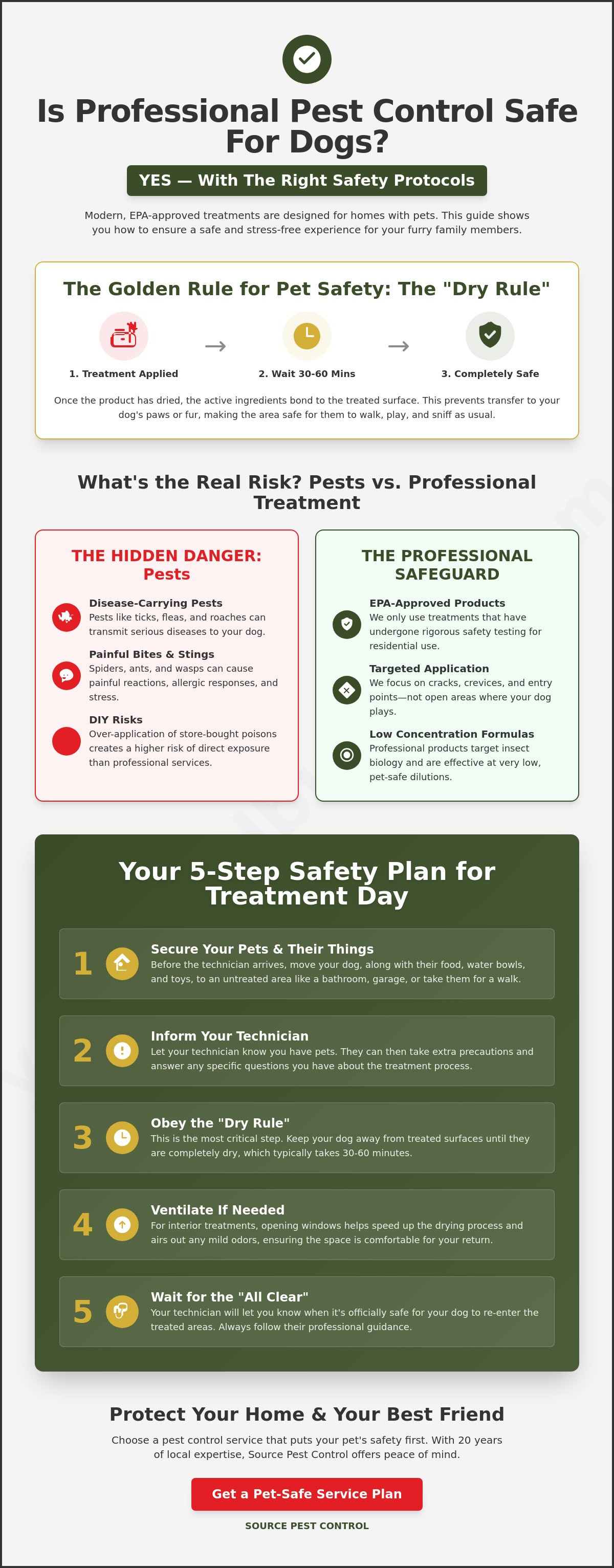
5 Essential Safety Steps for Dog Owners on Treatment Day
Preparation is the key to a stress-free service. While you now know that is pest control safe for dogs when handled by pros, your active participation makes the process even smoother. Follow these five steps to ensure your pup stays happy and healthy while we protect your home from invaders.
- Step 1: Communicate. Talk to your technician about your dog’s specific habits. If your pup has a favorite digging spot or a preferred corner for afternoon naps, let us know so we can adjust our application accordingly.
- Step 2: Clear the area. Pick up all pet-related items before we arrive. Move chew toys, water bowls, and bedding inside or into a sealed container. This prevents any accidental overspray from landing on things your dog puts in its mouth.
- Step 3: Secure your pet. Keep your dog in a crate, a separate room, or take them for a walk during the application. This prevents them from getting underfoot or investigating wet product before it has a chance to bond to surfaces.
- Step 4: Follow the Dry Rule. Wait at least 30 to 60 minutes before letting your dog back into treated areas. This is the most critical step for ensuring is pest control safe for dogs in your household.
- Step 5: Ventilate. If we performed an interior treatment, open a few windows once you return. Good airflow helps the product dry faster and keeps your home smelling fresh.
Taking these simple precautions allows us to do our job effectively while you maintain total peace of mind. If you are ready to set up a secure perimeter for your family, contact us for a pet-friendly quote today.
Preparing the Yard and Interior
Temecula properties often feature large yards or dedicated outdoor dog runs that require special attention. Before we start, check for "pockets" of moisture in heavily shaded areas under oak trees or patio covers. These spots stay damp longer than sun-drenched grass, so keep your dog away from these specific zones until they are bone-dry. Inside the home, remember to cover fish tanks with a towel and turn off the air pump temporarily. Bird cages should be moved to an untreated room, as birds have highly sensitive respiratory systems.
Post-Treatment Best Practices
Identifying when a product is dry is easy. Look for a visible sheen or dampness on the surface; if the area looks and feels like the rest of your flooring or patio, it is ready for paws. If your dog accidentally licks a treated surface while it is still wet, do not panic. Most modern residential products are highly diluted, but you should call us immediately. We can provide the specific product name and safety data sheet for your peace of mind or to share with your vet. Remember, staying on a regular maintenance schedule is always safer than waiting for an infestation. Routine service uses lower concentrations of product to maintain a barrier, avoiding the need for heavy-duty "emergency" treatments later.
Why Temecula Families Trust Source Pest Control
We’ve spent over 20 years protecting Southern California homes and the pets that live in them. We aren't a massive national franchise with a cold, clinical feel; we’re your neighbors. When you ask if is pest control safe for dogs, you aren't just asking a technician, you’re asking a local expert who cares about the safety of our shared community. We use the same EPA-approved, family-safe products in your home that we use in our own. Our team undergoes rigorous training to ensure every application is precise, targeted, and secure for your four-legged family members.
We stand behind our work with the Source Pest Control 100% Satisfaction Guarantee. If the pests return between your scheduled visits, we come back at no extra cost to you. We offer flexible options like our Bi-Monthly Service Plan or Monthly Service Plan to keep your home's perimeter strong throughout the year. This consistent maintenance is the most effective way to keep your dog safe from the regional threats we discussed earlier. By maintaining a steady barrier, we avoid the need for heavy-duty treatments, keeping the chemical footprint in your yard as small as possible.
Local Expertise You Can Count On
Our roots run deep in Temecula, Murrieta, and Menifee. Being "Your Local Bug Guy" means we understand the specific pest pressures of our unique region. We know exactly where the local invaders hide in our neighborhoods, from the hills of Fallbrook to the coastal yards in Oceanside. This local knowledge allows us to solve problems faster while using fewer products. We believe personal relationships lead to better, safer results for your neighborhood dogs. Unlike big corporate chains, we take the time to learn your pet's name and their favorite backyard spots.
Ready for a Pet-Safe, Pest-Free Home?
You shouldn't have to choose between a clean house and a healthy dog. We provide the peace of mind you need to enjoy your backyard again. Call us today for a free, no-obligation pet-safety consultation. We'll walk your property with you, identify potential entry points, and create a customized plan that keeps the pests out and your pup secure. Whether you need immediate ant control or a comprehensive quarterly service plan, we have you covered. It's time to stop worrying if is pest control safe for dogs and start trusting the local experts who treat your family like their own. Protect your home and your pets today!
Secure Your Home and Protect Your Best Friend
Protecting your household doesn't have to be a source of stress. You've learned that professional protocols and the "Dry Rule" ensure your dog stays out of harm's way. By choosing expert care over risky DIY methods, you eliminate dangerous local threats like black widows and ticks while keeping your pup's environment secure. When you ask is pest control safe for dogs, the answer lies in the hands of a neighborly expert who treats your home like their own.
We bring over 20 years of local experience to every service call in the Inland Empire. Our team uses only EPA-approved pet-safe products and backs every visit with a 100% satisfaction guarantee. You deserve a home that's free of pests and full of peace of mind. Let's work together to create a safe perimeter for your family and your pets. We take pride in being the protector your community trusts.
Get Your Free Pet-Safe Pest Control Quote Today!
We look forward to serving you and keeping those tails wagging safely in your backyard.
Frequently Asked Questions
How long should my dog stay off the grass after pest control?
Wait at least 30 to 60 minutes until the treatment is completely dry before letting your dog back on the grass. The Southern California sun usually speeds up this process, but you should always check for visible dampness. Once the product has dried, the active ingredients bond to the foliage and won't rub off on your pup's paws or fur. This simple step is the best way to ensure is pest control safe for dogs at your home.
What happens if my dog licks a surface that was recently sprayed?
Don't panic, but call your technician or a vet immediately for peace of mind. Most professional residential treatments are highly diluted and designed to be low-risk for mammals. Some dogs with sensitive stomachs might experience mild drooling or temporary nausea if they ingest wet product. We can provide you with the specific product label or Safety Data Sheet to share with your veterinarian to ensure your dog receives the right care.
Are there specific pest control chemicals I should avoid as a dog owner?
Avoid high-concentration organophosphates or older carbamate products often found in dated DIY formulas. We use modern, EPA-approved pyrethroids and targeted baits that focus on insect biology rather than mammalian systems. You should also be careful with "natural" products containing high levels of certain essential oils like tea tree or cinnamon. These can be significant irritants for dogs even though they are marketed as eco-friendly or organic alternatives.
Does Source Pest Control offer "green" or "organic" options for pets?
We offer Integrated Pest Management (IPM) strategies that prioritize physical barriers and botanical-based products when appropriate. While we focus on highly effective, low-impact solutions, we don't rely on "organic" labels that might not actually solve your pest problem. Our approach focuses on using the safest, most predictable products available to achieve a pest-free home. This balance ensures we protect your pets while effectively eliminating disease-carrying insects like ticks and fleas.
Can my dog stay in the house during an indoor pest treatment?
It's best to keep your dog in a separate, untreated room or a crate until the indoor application is fully dry. This prevents them from walking through wet spray or accidentally interfering with the technician's work. Once we give the all-clear and the product has bonded to the surfaces, your dog can return to their favorite spots. Opening a few windows for ventilation after the service also helps the interior dry faster.
Will rodent bait stations hurt my dog if they find them?
No, we use tamper-resistant bait stations specifically designed to keep curious dogs and children out. These heavy-duty boxes are anchored to the ground and require a special key to open. The bait inside is also formulated to be unattractive to pets, which adds a secondary layer of protection. Our rodent control plans prioritize these secure methods to ensure your dog stays safe while we manage the local rat or mouse population.
Should I bathe my dog after a yard treatment?
You don't need to bathe your dog as long as you wait for the yard to dry before letting them out. If your dog accidentally runs through a wet treated area, a quick paw wash with mild soap and water is a helpful precaution. Under normal conditions, the professional products we use stay on the grass and soil. They won't transfer to your dog's coat once the drying process is complete.
How often should I have pest control if I have pets?
A Bi-Monthly Service Plan is generally the most effective choice for households with dogs. This regular schedule maintains a consistent protective barrier that keeps fleas, ticks, and spiders away throughout the year. Regular maintenance uses lower concentrations of product than emergency "knockdown" treatments. This proactive approach is a major reason why is pest control safe for dogs when you trust a local expert to manage your home's long-term security.