
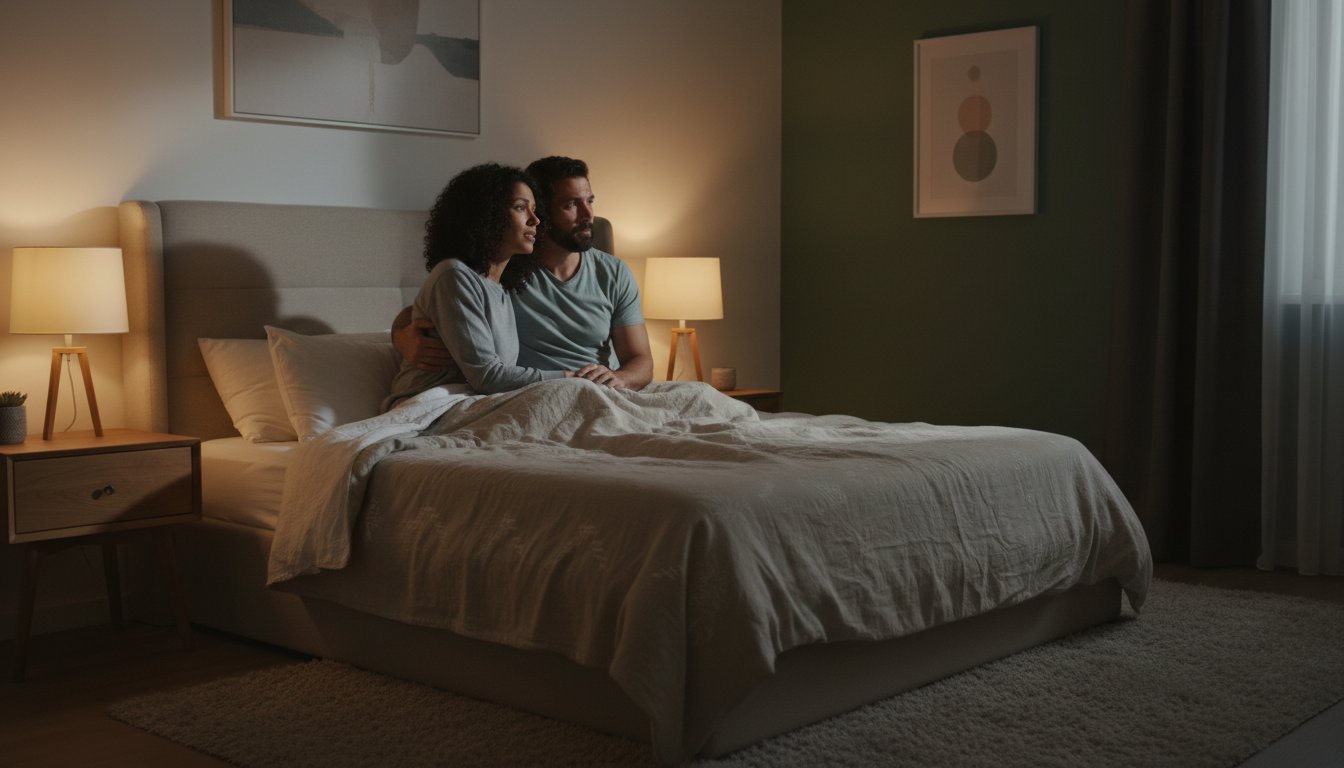
Last Tuesday, a homeowner near Wolf Valley Road discovered that the faint scuttling in her guest room wasn't just her imagination. Dealing with scratching in walls at night Temecula neighbors often face is a major stressor, and it's enough to keep anyone awake with worry. You're likely thinking about chewed wires or the health risks of pests like rats and mice. It's a stressful situation, but that noise is actually your early warning system telling you it's time to protect your home.
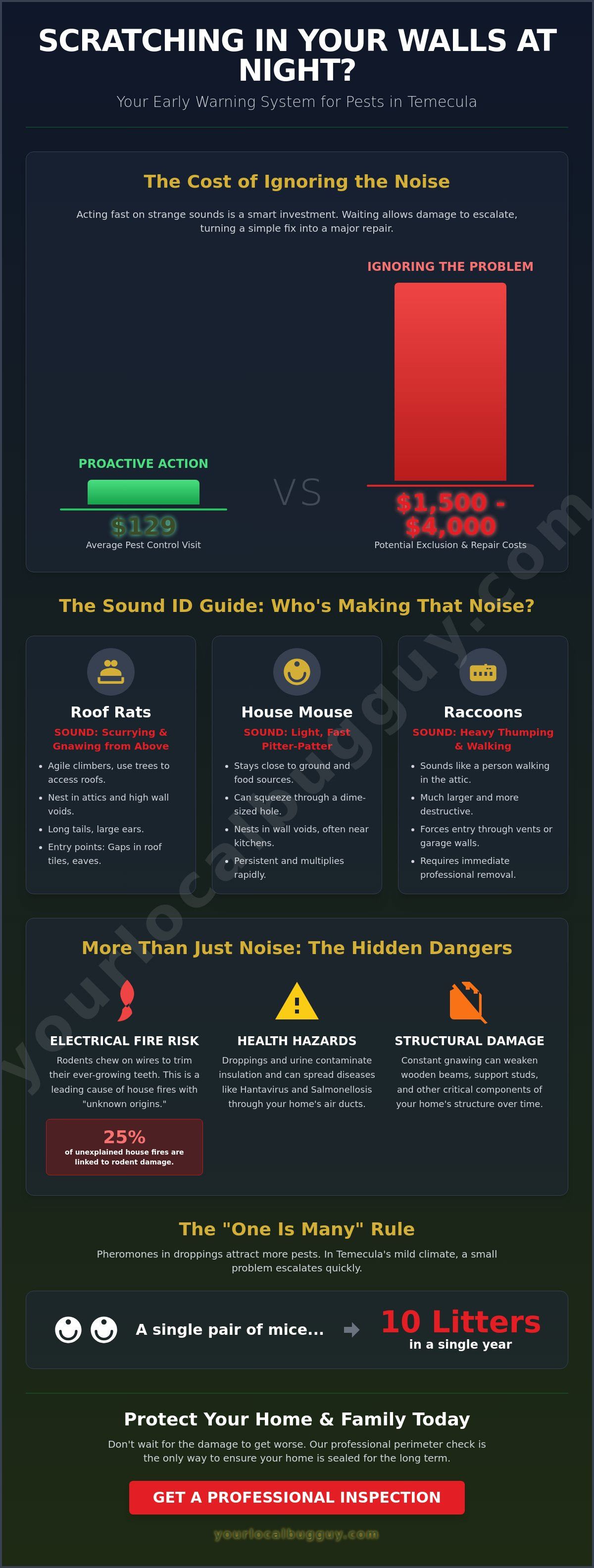
We'll help you identify exactly which nocturnal guest is making those sounds so you can stop the damage before it starts. While a standard pest control visit in California averages around $129, ignoring the problem can lead to structural exclusion repairs that cost between $1,500 and $4,000. Your Local Bug Guy is here to provide the handshake style of service you deserve. Read on to spot the difference between common pests, understand why immediate action prevents electrical fires, and learn how we seal your home to keep your family safe for the long term.
Key Takeaways
- Match specific sounds like light pitter-patter or heavy gnawing to the exact pest invading your space.
- Identify the difference between Temecula’s agile Roof Rats and the persistent House Mouse.
- Discover why scratching in walls at night Temecula homeowners hear is your best early warning sign to prevent electrical fires.
- Learn how to spot hidden entry points in your stucco and roofline that act as open invitations for rodents.
- Understand the "One is Many" rule and why a professional perimeter check is the only way to ensure your home stays sealed.
Deciphering the Scratching: What’s Lurking in Your Temecula Walls?
It is 2:00 AM, and you are staring at the ceiling. That faint rustle behind the drywall feels like it is right next to your head. While many homeowners hope it is just the house settling, homes do not typically settle with a rhythmic, scurrying beat. If you hear scratching in walls at night Temecula homes are likely hosting unwanted rodents. This sound is a primary indicator of a pest intrusion that needs your attention before it turns into a full blown infestation. Validating your concern now prevents a much larger headache later.
Why You Hear Them More at Night
There is a scientific reason those noises sound like a construction crew after dark. It is called the stethoscopic effect. During the day, Temecula’s traffic and household activity create a blanket of ambient noise. When the house goes quiet, your walls act like a drum, amplifying every tiny footstep against the hollow drywall or stucco. Most local invaders, including the common House mouse and the agile Roof Rat, are strictly nocturnal. These pests utilize a specialized survival mechanism where they remain active at night specifically to avoid any interaction with humans or pets.
The Cost of Waiting to Call a Pro
Waiting to address these sounds is a gamble with your home's safety. Rodents have incisors that never stop growing, so they must gnaw on hard surfaces to keep them trimmed. Often, this means your electrical wiring. Industry safety reports suggest that roughly 25% of house fires with unknown origins are actually caused by rodent damage to wires. Beyond fire risks, the damage to your attic insulation is immediate. Rodents leave behind pheromones in their urine and droppings that signal to other pests that your home is a safe haven. In the mild climate of the Inland Empire, a single pair of mice can produce up to 10 litters in a single year. Act fast to protect your family from the following risks:
- Contaminated insulation that requires professional removal and replacement.
- Exposure to diseases like Hantavirus or Salmonellosis through air ducts.
- Structural damage to wooden beams and support studs from constant gnawing.
- Increased repair costs as the colony grows larger and more established.
Take these noises seriously. Identifying the pest today is the first step toward reclaiming your peace of mind and protecting your property value. Your home is your sanctuary, and keeping it sealed is our top priority.
Temecula’s Usual Suspects: Identifying the Rodents and Wildlife
Temecula's unique mix of lush vineyards, palm trees, and rolling hills makes it a beautiful place to live. Unfortunately, these features also invite specific pests into your home. When you hear scratching in walls at night Temecula has a few likely culprits that are common in our Inland Empire neighborhoods. Identifying which one is keeping you awake is the first step toward reclaiming your quiet nights. Knowing your neighborly pests helps you understand exactly how they are getting inside.
Roof Rats: The High-Altitude Invaders
The Roof Rat is our area's most common uninvited guest. Unlike their heavier cousins, these rats are built for climbing. They love the palm trees and citrus groves that dot our local landscape. They use overhanging branches like a highway to reach your roofline. Once they find a small gap in your Spanish tile roof or an unsealed eave, they move right in. These pests have tails longer than their bodies and large, prominent ears. Because they are so agile, they often nest in attics and high wall voids. If the sound is coming from above your head, it's likely a Roof Rat. To better protect your home, you can Identify and Prevent Rodent Infestations by checking for greasy rub marks along high ledges or near roof vents.
Mice and Raccoons: The Ground and Attic Teams
While Roof Rats take the high ground, the common house mouse stays closer to your kitchen. These small pests are incredibly persistent. A mouse can squeeze through a hole the size of a dime. They often use the wall voids near your pantry to stay close to food sources. If you hear light, fast pitter-patter, it's usually a mouse. On the other end of the spectrum, raccoons create much heavier thumping sounds. A raccoon in the attic sounds like a person walking around. They often force their way through garage-to-wall transitions or loose vent covers. If you hear these heavy steps, it is time to act. Our professional rodent control services can help identify these entry points before the damage gets worse.
Sometimes the sound isn't a mammal at all. Large insects like crickets or even bats can mimic scratching sounds. Bats are common in our local canyons and might tuck themselves into wall gaps for warmth. However, roughly 90% of the nighttime scratching reported in Temecula homes is rodent-related. Don't wait for the problem to grow. Addressing a few scouts now prevents a full colony from moving in next month. If you are tired of scratching in walls at night Temecula families can rely on us to find the source quickly and safely.
The Sound ID Guide: Matching the Noise to the Pest
Listening to scratching in walls at night Temecula families often describe sounds ranging from light tapping to heavy thuds. Identifying the specific rhythm and volume of these noises helps determine exactly what is living inside your home. Because different pests have unique behaviors, the sound they make is often their most revealing trait. Use this guide to match the noise in your wall to the likely culprit:
- Light, fast pitter-patter: This usually indicates a house mouse or young roof rats moving quickly between nesting sites and food sources.
- Heavy gnawing or grinding: This sharp, rasping sound means a rodent is sharpening its teeth on your wood studs or electrical wiring.
- Thumping and vocalizing: Heavy footsteps accompanied by growls or chattering suggest larger wildlife like raccoons or opossums.
- Consistent, rhythmic scratching: This often signals nesting behavior as a pest shreds your insulation to create a nursery.
Scurrying vs. Gnawing: What the Sound Tells You
Scurrying sounds represent the logistics of an infestation. Pests move through wall voids to reach kitchens or water sources, creating a frantic, running noise. Gnawing is more stationary and deliberate. Rodents must chew on hard materials to prevent their teeth from overgrowing. Bruxing is the sound of a rodent grinding its teeth together, often creating a sharp, repetitive clicking noise that vibrates through the drywall. If you hear this grinding, it means the pest is settled and comfortable in its environment. This behavior causes the most structural damage, as they often target the 2x4 beams that hold your home together.
Daytime vs. Nighttime Noise Identification
Timing is the most reliable way to narrow down the suspect. If you hear activity during the bright morning hours, you are likely dealing with squirrels or birds that have nested in your eaves. These animals are diurnal and follow a human-like sleep schedule. However, if the scratching in walls at night Temecula neighbors report starts after the sun goes down, it is almost certainly a nocturnal pest like a rat or mouse. These animals wait for the house to go quiet before they emerge. To get a better look, use a high-lumen flashlight to check for shadow movement behind attic vents or crawl space covers. Seeing a flicker of movement behind a vent often confirms that a scout has found a way inside.
Identifying these sounds early saves you from the stress of a growing colony. Once you know what you are hearing, you can take the right steps to seal your home and protect your family. We are here to help you translate those noises into a clear action plan.
Exclusion and Prevention: Keeping Pests Out of the Inland Empire
Stopping the noise starts with a strong defense. Once you identify scratching in walls at night Temecula homes require a proactive approach to keep invaders out for good. Traps might catch the current residents, but exclusion creates a permanent barrier. It is the most effective way to protect your property and your family's health. Focus on your home's exterior to turn a vulnerable structure into a fortress.
- Conduct a full perimeter check: Walk around your foundation and look for any gap larger than a quarter inch.
- Seal the roofline: Eave gaps and loose shingles are the primary front doors for local Roof Rats.
- Manage the landscape: Trim all tree branches so they are at least 6 feet away from your roof to remove jumping points.
- Eliminate water sources: Fix leaky air conditioning lines and dripping outdoor faucets that provide a reliable water supply in our dry climate.
Rodent-Proofing Temecula-Style Architecture
Our local architecture presents unique challenges for pest control. Spanish tile roofs are beautiful, but the curved gaps at the edges are perfect entry points for agile climbers. Use heavy duty steel wool and galvanized wire mesh to plug these openings. Mice and rats cannot chew through these materials. Pay close attention to the 'weep screeds' at the base of your stucco walls. These gaps are designed for drainage, but if they are bent or oversized, they allow easy access to your wall voids. For a deeper dive into protecting your specific home type, check out our rodent control guide. These small adjustments make a massive difference in long term prevention.
The Role of Cleanliness and Sanitation
Pests stick around because they find a steady food source. Storing pet food in original paper bags is an invitation for trouble, especially in Menifee or Temecula garages. Move all kibble into airtight metal or thick plastic containers immediately. If you have backyard citrus trees, pick up fallen fruit every single day. Decaying oranges and lemons are a five-star meal for a colony of rats. After we clear an infestation, professional sanitization is the final step. This process removes the pheromone scent trails that rodents leave behind. Without these trails, new pests won't be "called" to your attic or walls. A clean home is much harder for a scout to target. Schedule a perimeter inspection today to find and seal every hidden entrance before the next breeding cycle begins.
When to Call the Bug Guy: Professional Rodent Control in Temecula
Hearing that first faint scuttle is your cue to act. In the pest control industry, we live by the "One is Many" rule. If you hear scratching in walls at night Temecula, it's almost never a solo traveler. Rodents are social creatures. By the time you hear them, a colony is likely already establishing itself in your insulation. Waiting even a few weeks allows a small problem to grow into an expensive structural repair. Acting early is the only way to protect your home's value and your family's safety.
Many homeowners start with grocery store snap traps, but these often fail against Temecula's intelligent Roof Rats. These pests are notoriously "trap-shy." They notice new objects in their environment and will avoid them for weeks. If a trap snaps but doesn't catch them, they learn to avoid it forever. At Source Pest Control, we bring 20 years of local experience to your doorstep. We use a neighborly, handshake style of business to protect your family with products that are safe for your pets and children. We don't just set traps; we solve the problem at the source with a 100% satisfaction guarantee.
Our Professional Inspection Process
We don't guess where the pests are hiding. Our technicians use advanced tools like thermal imaging and moisture meters to find heat signatures and nests tucked deep behind your drywall. This technology allows us to see what's happening inside your walls without tearing them open. We also look for specific "rub marks" to determine exactly which species is invading. This precision is a key part of our pest control Temecula CA strategy. Once we know the species and the nest location, we can create a targeted plan to remove them safely.
Long-Term Protection Plans
Removing the current residents is only half the battle. To ensure you never have to deal with scratching in walls at night Temecula again, we offer monthly and bi-monthly maintenance plans. These visits allow us to refresh your perimeter treatments and check for new entry points before they become a highway for rodents. It's about providing you with long-term peace of mind. Source Pest Control is a family-owned local fixture, not a cold corporate franchise. We treat your home like it's our own because we are part of this community too. Get your free inspection from Your Local Bug Guy today and let's put a stop to the noise so you can finally get a good night's sleep.
Reclaim Your Home and Your Sleep
You now have the tools to identify whether those unsettling sounds are scurrying mice or persistent roof rats. Remember that sealing those eave gaps and trimming your landscape 6 feet back from the roofline are your best defenses against future visitors. Addressing scratching in walls at night Temecula homeowners hear is about more than just peace and quiet; it's about protecting your family from fire hazards and health risks. That noise is your early warning signal, so don't ignore it.
Our team brings over 20 years of local experience to every inspection. We are a family-owned business that treats every neighbor like a friend. We stand behind our work with a 100% satisfaction guarantee to give you total peace of mind. You don't have to share your walls with uninvited guests any longer. Let us help you secure your sanctuary and keep it pest-free for the long haul.
Stop the scratching and get a free inspection from Your Local Bug Guy!
Sleep soundly knowing your home is safe, sealed, and protected by experts who care about our community.
Frequently Asked Questions
Is it normal to hear scratching in walls at night?
No, it is not normal for a home to make rhythmic scurrying or gnawing sounds. While houses settle due to temperature changes, hearing scratching in walls at night Temecula homeowners should recognize this as a clear sign of a pest intrusion. These noises indicate that a nocturnal animal, usually a rat or mouse, is active and likely nesting within your wall voids.
Can rodents in the walls make you sick?
Yes, rodents carry several dangerous pathogens that can spread through your home's air supply. They contaminate attic insulation with urine and droppings, which may harbor diseases like Hantavirus, Leptospirosis, or Salmonellosis. These contaminants can enter your living space through the HVAC system, making professional cleanup a vital part of the recovery process after an infestation.
How do I tell if it's a rat or a mouse in my wall?
You can usually tell the difference by the volume and location of the noise. Mice are smaller and produce a light, frantic pitter-patter, often staying near ground-level areas like the kitchen or pantry. Roof rats are much louder and create heavy gnawing or "grinding" sounds, typically focused in the attic or the upper sections of your walls.
Will rats eventually leave my walls on their own?
No, rodents will stay as long as your home provides warmth, safety, and a nearby food source. They won't move out unless they are forced out or the environment becomes inhospitable. Because a single pair of mice can produce up to 10 litters in a year, waiting for them to leave only gives the colony more time to grow and cause damage.
What is the best way to get rid of noises in the attic?
The most effective solution is a combination of professional trapping and total structure exclusion. You must seal every gap larger than a quarter inch with materials like galvanized wire mesh that rodents cannot chew through. Simply setting traps is a temporary fix; you have to close the "front door" to ensure new pests don't follow the scent trails of the old ones.
How much does professional rodent removal cost in Temecula?
A standard pest control service visit in California typically costs around $129 as of 2026. If your home requires full rodent exclusion to seal entry points, the price generally ranges from $1,500 to over $4,000 depending on the architecture. Investing in a professional inspection early helps you avoid the higher costs associated with long-term structural damage and insulation replacement.
Can rats chew through the drywall into my house?
Yes, rats can easily chew through drywall, wood, and even plastic plumbing pipes. Their incisors never stop growing, so they are biologically driven to gnaw on hard materials to keep their teeth trimmed. If they smell food on the other side of a wall, they have no problem creating a new hole to reach your pantry or kitchen counters.
Do ultrasound pest repellers actually work for wall noises?
No, scientific research shows that ultrasound devices are ineffective for pests living inside walls. High-frequency sound waves cannot penetrate solid objects like drywall, studs, or fiberglass insulation. Even in open rooms, rodents often become accustomed to the noise within a few days, making these devices an unreliable choice for scratching in walls at night Temecula families are experiencing.